
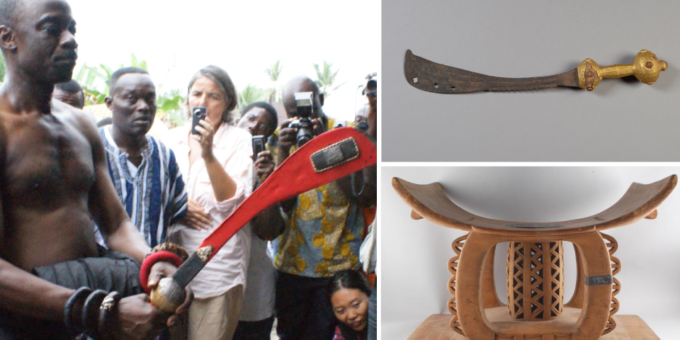
Introduction To The Akan Belief And Culture
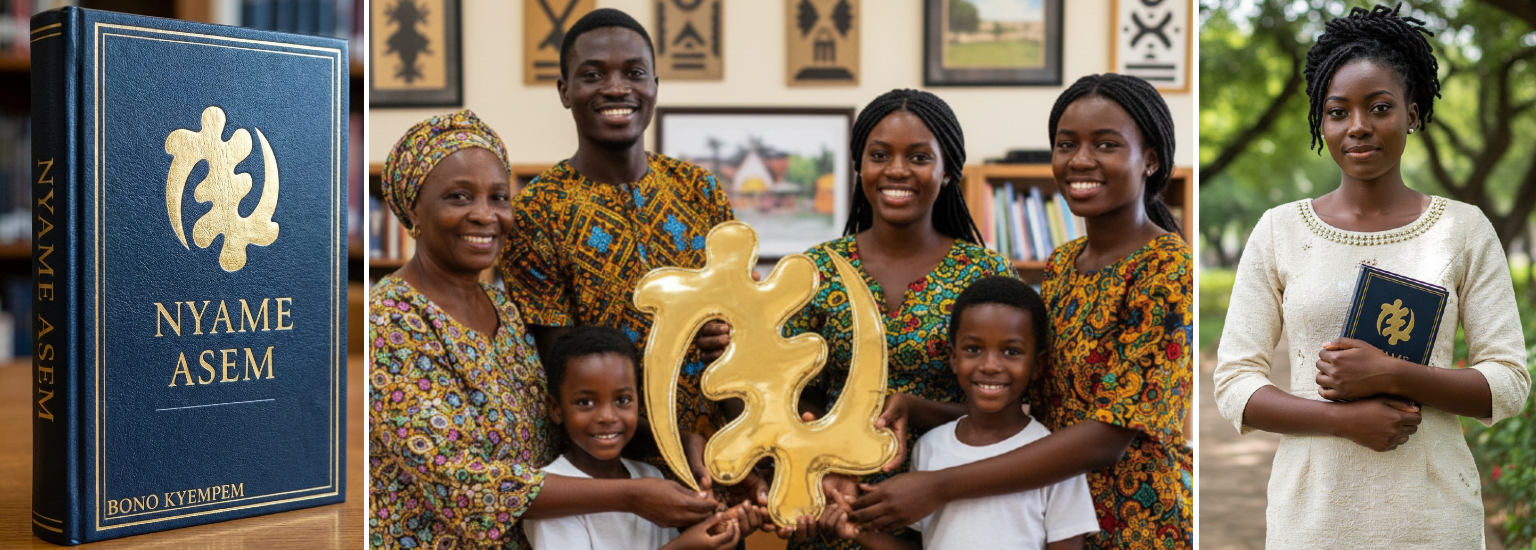
We are a devoted lineage within the broader Akan people, dedicated to restoring and preserving the original spiritual identity and heritage of our ancestors. Our belief centers on Nyame, not as the God redefined by other religions, but as the first ancestral man of the Akan people, with a wife and several children. It is from Nyame’s first two children—one male and one female—that the Akan people inherit their bloodline, identity, and cultural order. In our tradition, Nyame, who is sometimes referred to as Onyankopon, Onyame Kwame, Odomankoma, Ɔbɔadeɛ, etc., stands as the Supreme Source, the first Ancestor, and the originator of the Akan social, cultural, and moral universe. Nyame established the foundations of the following: Akan Culture and Tradition, the dual-gender rulership system (Male and Female authority working side by side)
He is distant yet ever-present, powerful yet not worshipped as a foreign deity—rather, he is honored as the great ancestor whose lineage continues through us.
3 Sacred Objects Of The Akan People
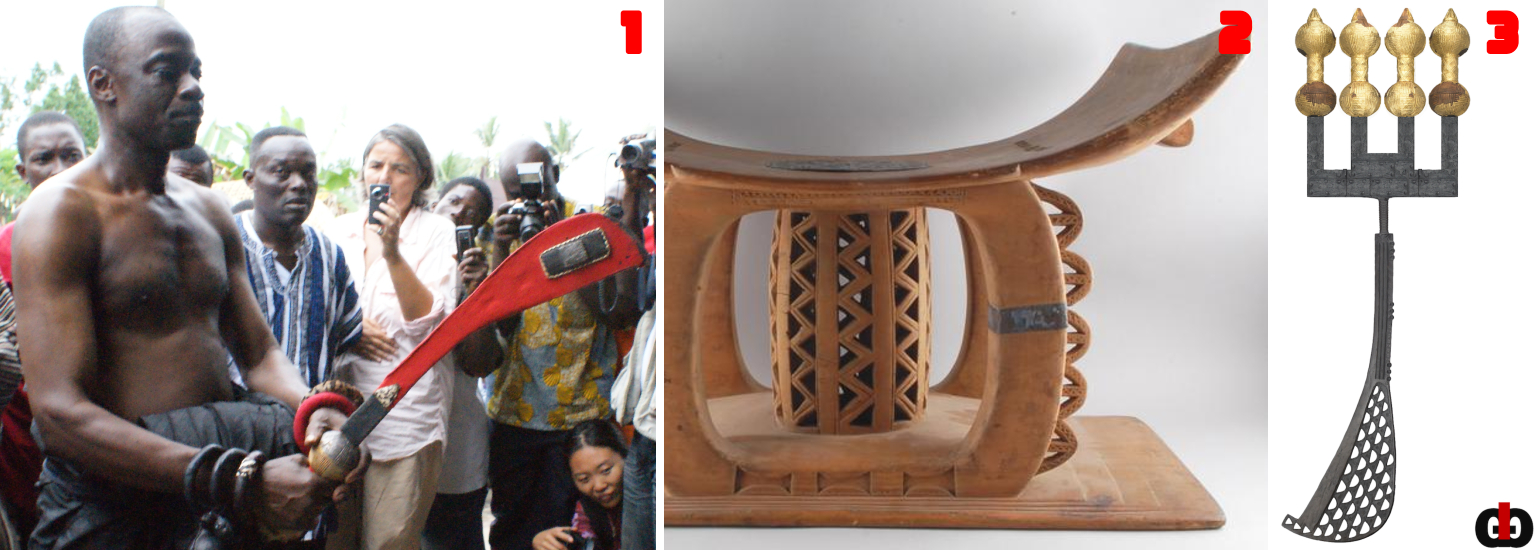
First Oath: Sword Authority
In the ancient beginning, when Nyame—the first Akan and the original practitioner of our traditions—became old and sensed that his time on earth was drawing to an end, he prepared to secure the future of his people. Knowing that culture survives only through order, inheritance, and oath, he called for his son, named Bia, the firstborn male. Nyame placed his sacred sword—the symbol of authority, protection, and guardianship—into his son’s hands. He instructed him to swear an oath to inherit and safeguard all that makes the Akan people who they are. The son swore by the sword, accepting the responsibility to: Protect the Akan culture. Preserve the traditions, rituals, and laws. Guard the land and the people. Lead with courage, discipline, and truth.
By this oath and by the sword, Nyame’s son inherited all his father’s possessions: the land, rituals, spiritual duties, cultural authority, and the responsibility of leadership.
Second Oath: The Stool’s Authority, Balance of Power
When the first oath of the sword was complete, Nyame realised that he had entrusted everything to his son, leaving nothing with which to honour his daughter—Asaase Afia (Afua), the firstborn female, equally essential to the order of life. Nyame, therefore, called his son once more and instructed him to use the same sacred ceremonial sword to create something worthy of his sister. Together, father and son selected a strong piece of wood and carved a stool—not an ordinary seat, but a sacred symbol of soul, identity, wisdom, and inheritance. Nyame then summoned his daughter before the Abosom and the elders. Presenting her with the carved stool, he commanded her to swear an oath upon it.
Through that oath, she became the following:
- The partner in rulership
- The judge, holding the power of decision,
- The custodian of lineage, from whose children the next inheritor of the stool would emerge.
Thus, through the sword and the stool, Nyame established the eternal twin pillars of Akan governance: male authority (sword) and female authority (stool).
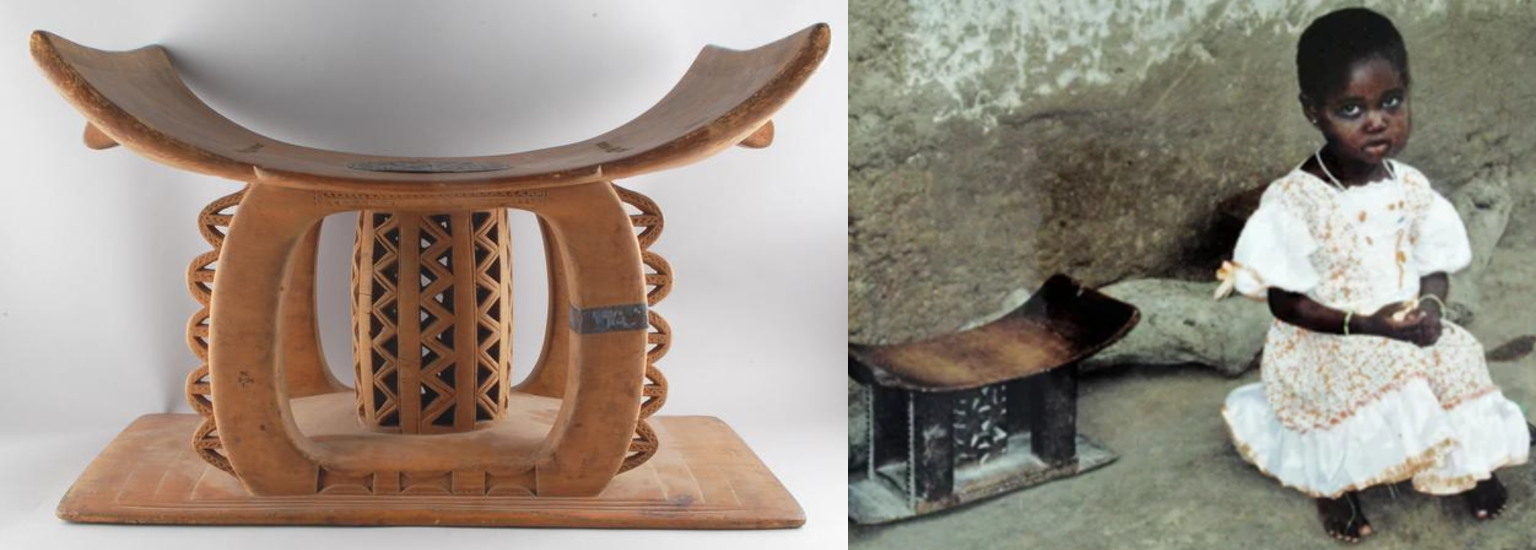
The Origin of the Akan Royal Stool
The royal stool originates at the very foundation of the Akan people. It is the primary symbol of maternal authority within Akan culture and tradition, representing inheritance, continuity, and legitimacy through the maternal line. Today, thousands of royal stools exist—each one a replica derived from that first primordial stool—corresponding to the many Akan royal families. Yet all trace their legitimacy back to a single sacred origin. The original royal stool was carved by a brother for his younger sister, the first daughter, by direct command of their father, Nyame, the founder of Akan identity. This act was not merely ceremonial or decorative. It was institutional. It permanently established female authority as a foundational pillar of Akan governance.
The Sacred Hierarchy
In the hierarchy of power, the Royal Stool stands second only to the Sacred Ceremonial Sword entrusted to Nyame’s first son. The sword represents supreme guardianship over Akan culture and tradition. The king who occupies office does so under the oath of the sword—not by personal power but by sacred obligation. When Nyame’s first son, Bia, swore the Oath of the Sword to protect his father’s legacy, property, and the Akan identity, the sword was elevated to sacred status. From that moment forward, it was no longer an instrument of warfare but an instrument of covenant—used only for oath-binding. Later, when Nyame commanded his son to carve the Royal Stool using that same sacred sword, the act itself consecrated the stool. It established the Stool as the second sacred authority within Akan tradition—inseparable from the Sword that formed it.
The Principle of Double Authority
To this day, the Akan system rests upon the same dual structure established at the beginning:
- The Sword (Male Authority) — guardianship, protection, and enforcement
- The Stool (Female Authority)— inheritance, legitimacy, and continuity
Neither exists in isolation.
Neither is subordinate in essence.
Together, they preserve the balance upon which the Akan people were founded.
This is not a gender competition.
It is complementary sovereignty.
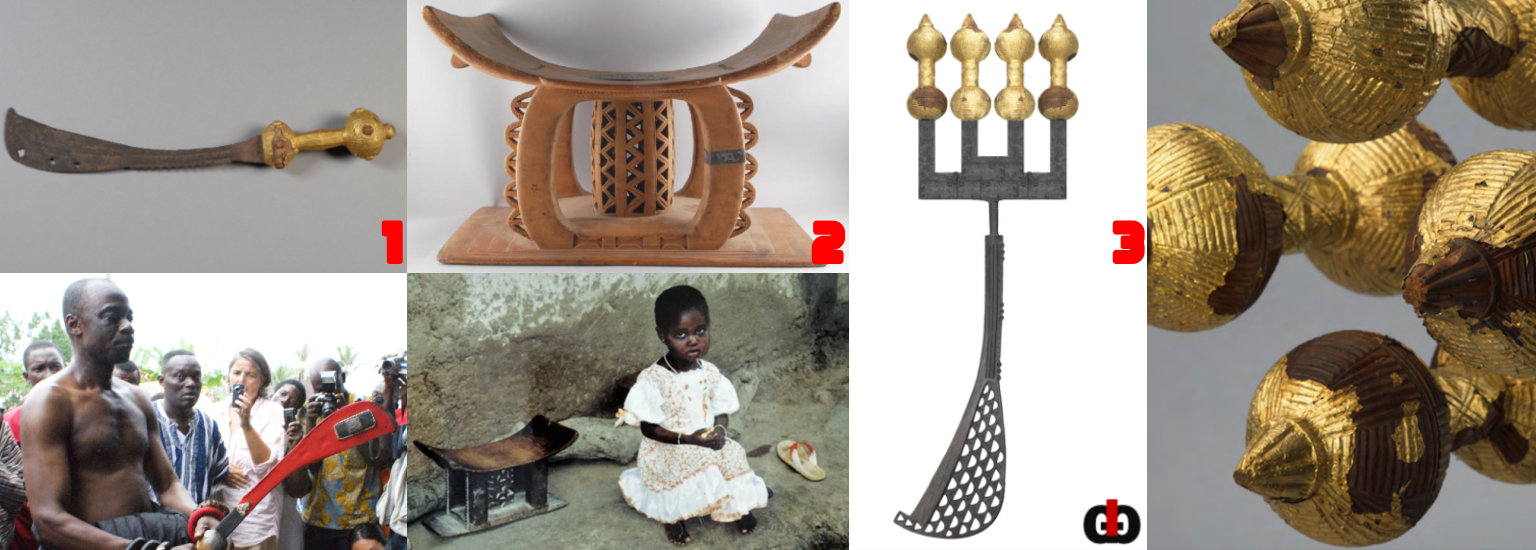
Final Oath: Unity Between Brother and Sister.
With both children now sworn in—his son (Bia) by the sword and his daughter (Assase Afua) by the stool of Nyame—they brought forth a unique, four-handled sword. He commanded both children to hold the sword together, each gripping two handles with both hands. In the presence of Nyame and the Abosom, they swore an oath of unity:
- To uphold the responsibilities given to each of them
- To maintain a balance between male and female authority
- To protect the Akan culture, spiritual laws, and traditions
- To never abandon the oaths made before their father
This sacred moment became the foundation of Akan spirituality, culture, governance, inheritance, and social order that continues to this day.
Reader’s Note
1. Some Akan dialects confuse Asaase Afia (daughter) with their mother, Asaase Yaa, reflecting how oral traditions vary across regions.
2. For an in-depth understanding of the origin of the Akan cultural practice, get in touch or visit our events and programs page for more information on where to find us.
Learn More!
Related Stories
Would like to hear from you!
For inquiries, collaborations, or more information about Bonokyempem, please contact us using the details provided. Our team will respond as soon as possible. To learn more about our services, visit, worship, and explore the traditions and cultural ways of the Akan people and their origins, and connect with us on our social media platforms. Follow us for updates, teachings, and community activities.





















Recent Comments